
Distinctive Projects
The “Distinctive Projects” section on the Strong Floor Laboratory website serves as the main showcase of the laboratory’s scientific, experimental, and technical capabilities. The scope of activities in this research laboratory includes large-scale experiments accompanied by advanced analyses, where the experimental results are used to validate computational methods. Providing project documentation helps researchers, construction industry professionals, and students become familiar with the laboratory’s actual capabilities, equipment accuracy, data quality, and the expertise level of the technical team. Presenting selected completed projects, in addition to creating transparency and confidence, provides a platform for researchers to gain inspiration for conducting new studies and strengthens the position of the Strong Floor Laboratory as a specialized reference center for structural testing.
Seismic Test of a Curved Reinforced
Concrete Shear Wall
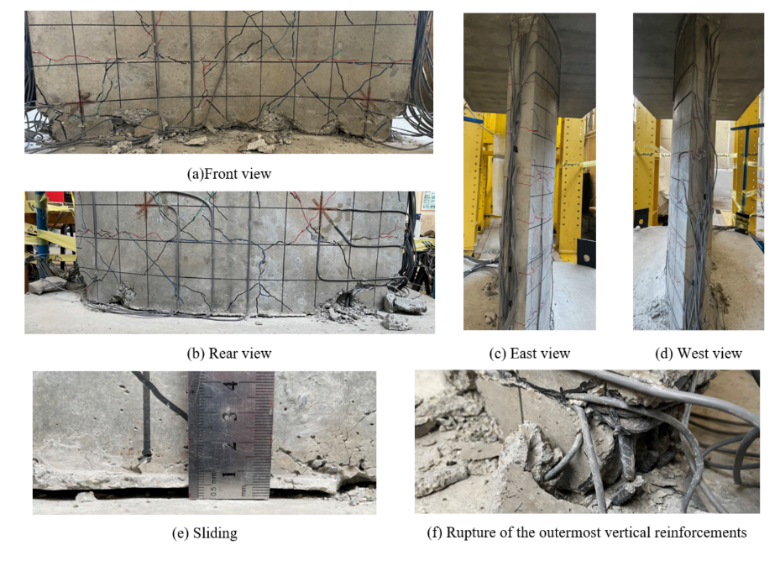
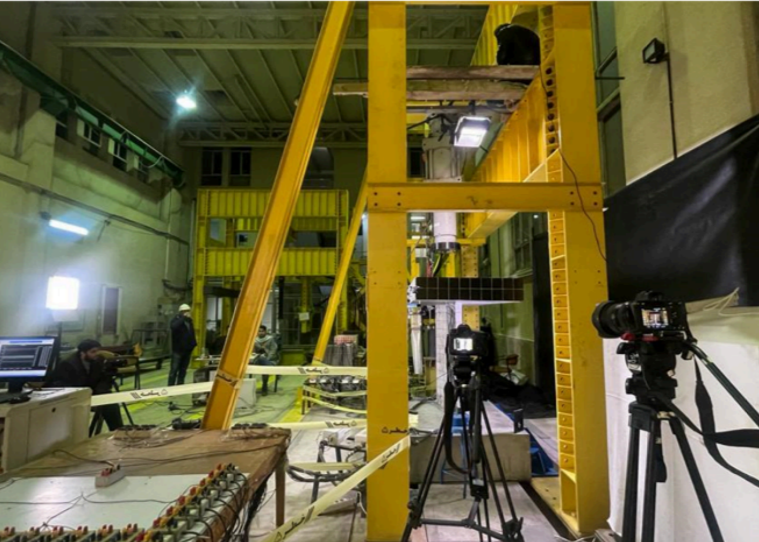
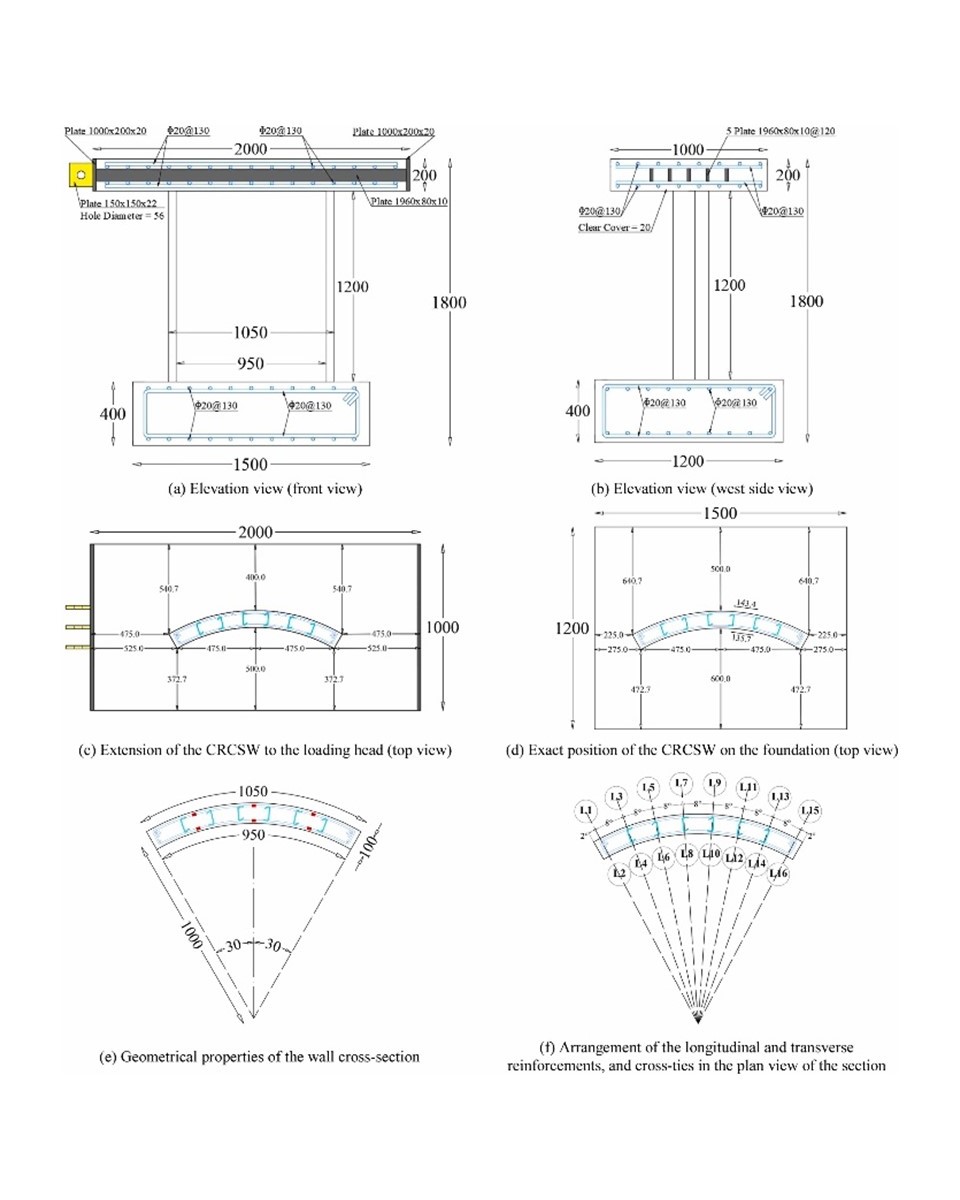
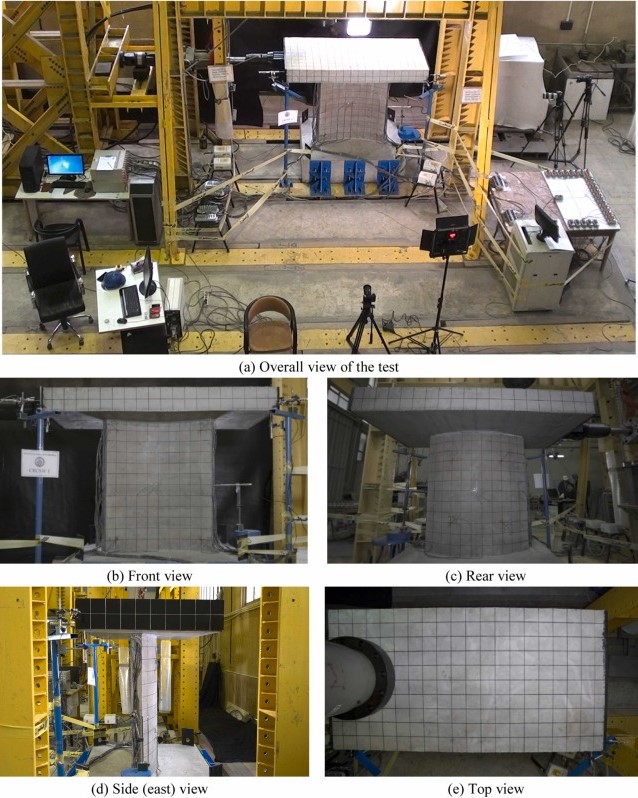
This research investigated the seismic behavior of a reinforced concrete shear wall with a curved cross-section at one-third scale. For conducting the experiment, a special loading system capable of applying simultaneous in-plane and out-of-plane displacements was designed and implemented.
In addition, a set of high-precision sensors and a full-field imaging system fully recorded deformations, rotational displacements, and the torsional–flexural behavior resulting from the wall’s geometric configuration.
The results of this study included the failure pattern, failure mechanism, cyclic behavior, effective stiffness, and energy dissipation capacity. The findings showed that concrete walls with an arc-shaped cross-section can exhibit desirable seismic performance.
This experiment represents the first comprehensive laboratory study in this field, conducted together with extensive analytical and numerical investigations. It provided valuable data for the development and improvement of design provisions for curved shear walls in seismic codes.
This research investigated the seismic behavior of a reinforced concrete shear wall with a curved cross-section at one-third scale. For conducting the experiment, a special loading system capable of applying simultaneous in-plane and out-of-plane displacements was designed and implemented.
In addition, a set of high-precision sensors and a full-field imaging system fully recorded deformations, rotational displacements, and the torsional–flexural behavior resulting from the wall’s geometric configuration.
The results of this study included the failure pattern, failure mechanism, cyclic behavior, effective stiffness, and energy dissipation capacity. The findings showed that concrete walls with an arc-shaped cross-section can exhibit desirable seismic performance.
This experiment represents the first comprehensive laboratory study in this field, conducted together with extensive analytical and numerical investigations. It provided valuable data for the development and improvement of design provisions for curved shear walls in seismic codes.
Comprehensive Study of Reinforced Concrete
Slab Behavior with Simultaneous Variation of Reinforcement, Concrete Grade, and Strengthening Systems
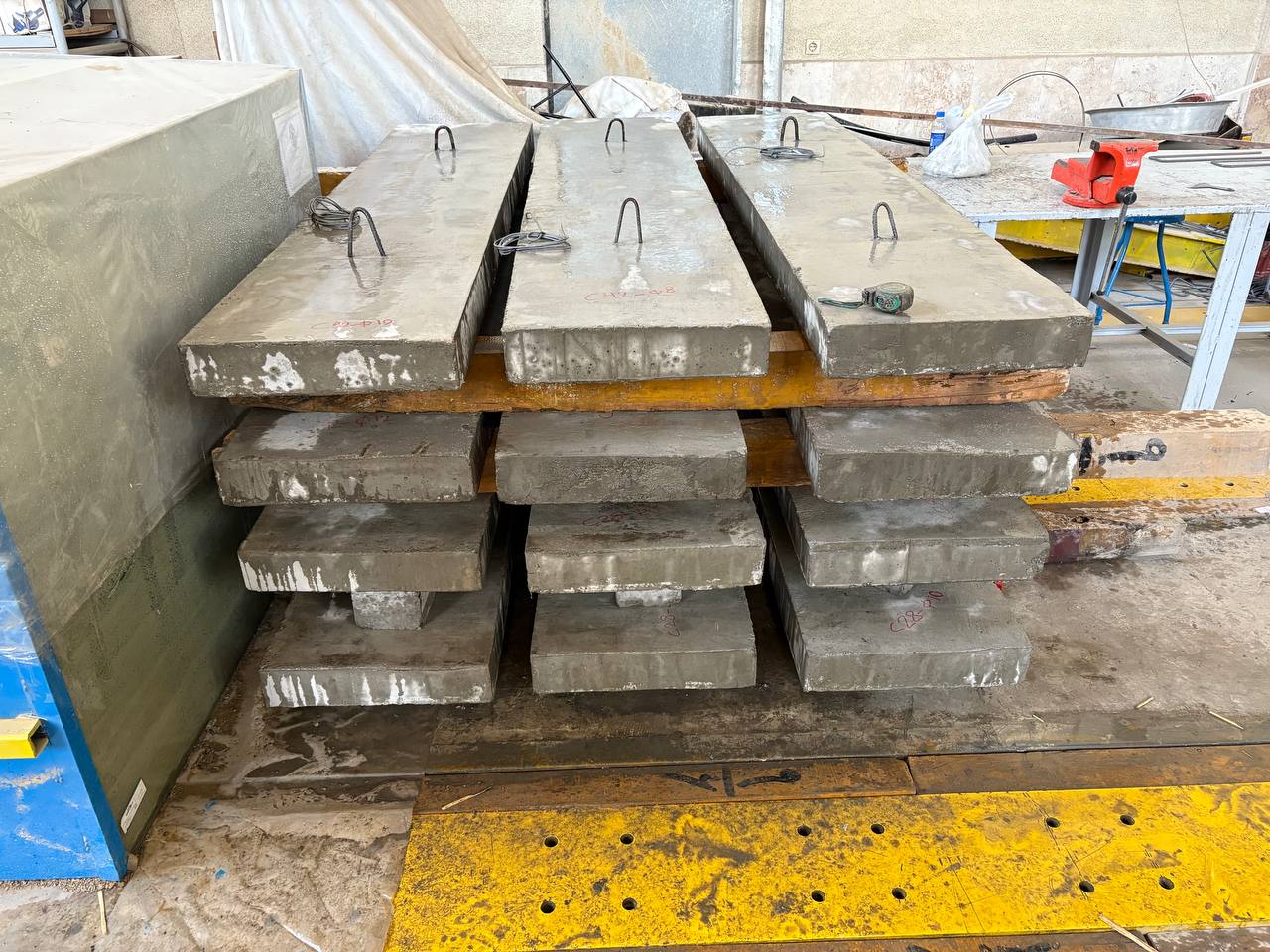
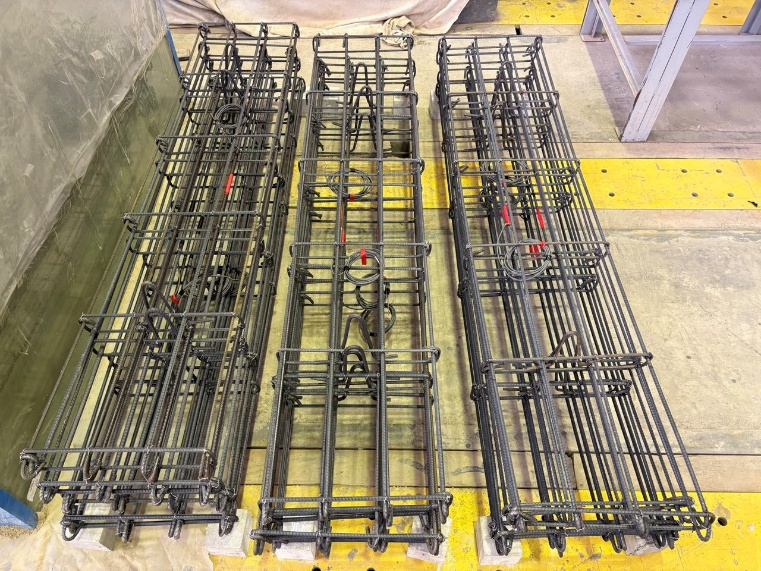
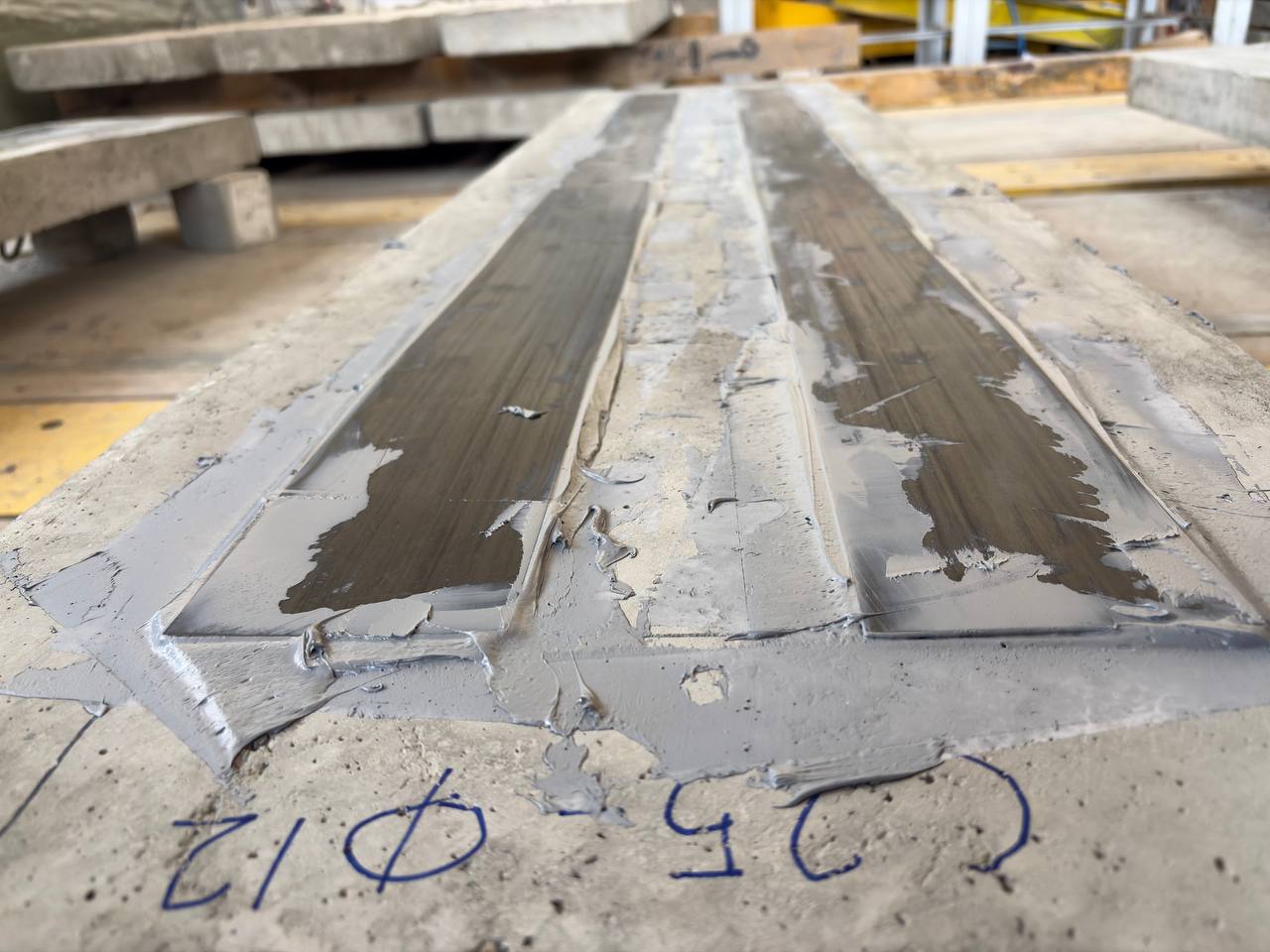
In this research, a systematic series of concrete slab specimens with different reinforcement ratios, various concrete grades, and different strengthening methods—including CFRP laminates and steel strips—were fabricated and tested.
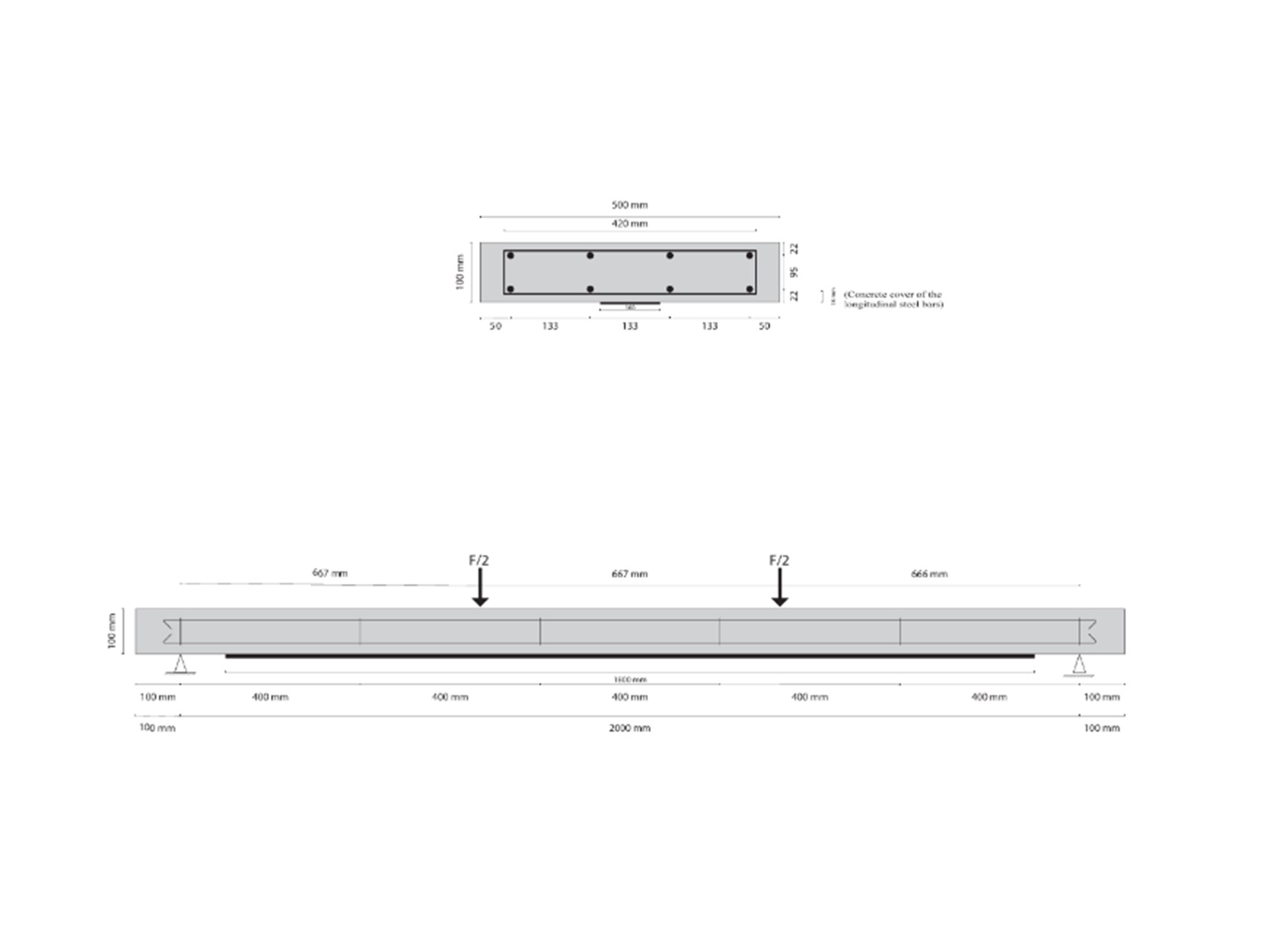
After strict quality control, the specimens were subjected to four-point bending loading at full scale, and their behavior was recorded using advanced instrumentation. These experiments enabled the evaluation of the combined effects of changes in steel reinforcement ratio, concrete compressive strength, and external strengthening contribution on initial stiffness, ultimate capacity, ductility, and failure mechanisms.
Based on the achievements of this research and the conducted computational analyses, a database of the actual behavior of strengthened reinforced concrete slabs serves as a valuable reference for design engineers and researchers in the field of concrete structure strengthening. It can influence the advancement of national and international guidelines in this area.
This experiment represents one of the first comprehensive laboratory studies in this field, carried out together with extensive analytical and numerical studies, providing valuable data for the development and refinement of design provisions for structural strengthening.
After strict quality control, the specimens were subjected to four-point bending loading at full scale, and their behavior was recorded using advanced instrumentation. These experiments enabled the evaluation of the combined effects of changes in steel reinforcement ratio, concrete compressive strength, and external strengthening contribution on initial stiffness, ultimate capacity, ductility, and failure mechanisms.
Based on the achievements of this research and the conducted computational analyses, a database of the actual behavior of strengthened reinforced concrete slabs serves as a valuable reference for design engineers and researchers in the field of concrete structure strengthening. It can influence the advancement of national and international guidelines in this area.
This experiment represents one of the first comprehensive laboratory studies in this field, carried out together with extensive analytical and numerical studies, providing valuable data for the development and refinement of design provisions for structural strengthening.
Experimental Investigation of Reinforced Concrete Arches Strengthened with GFRP
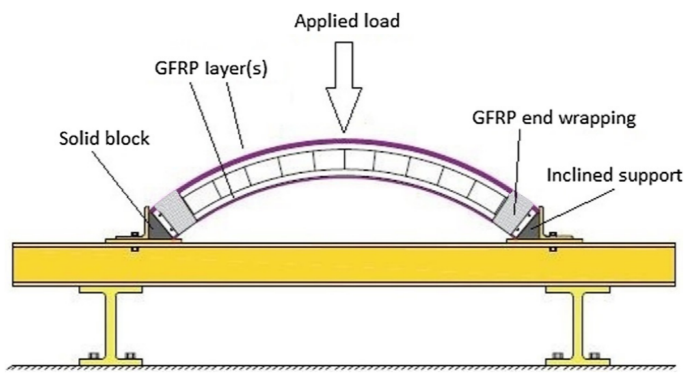
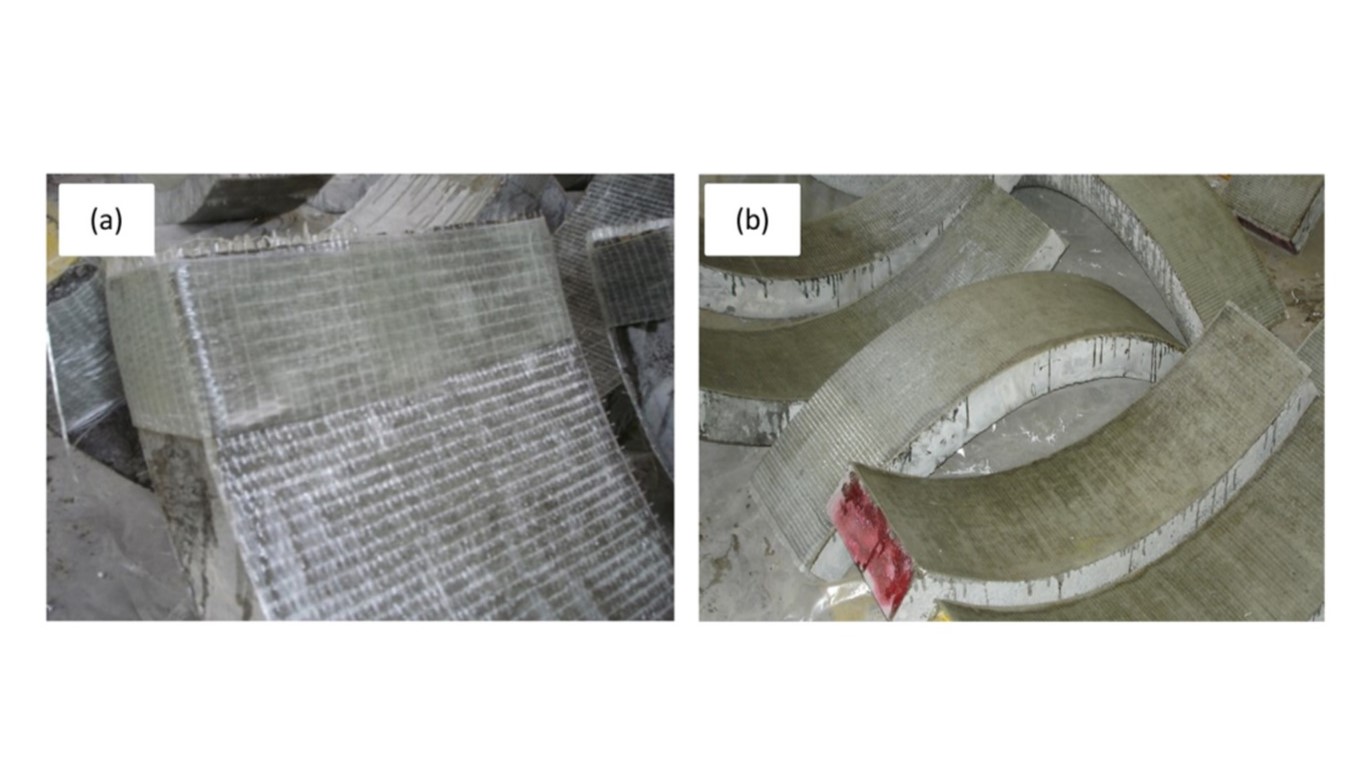
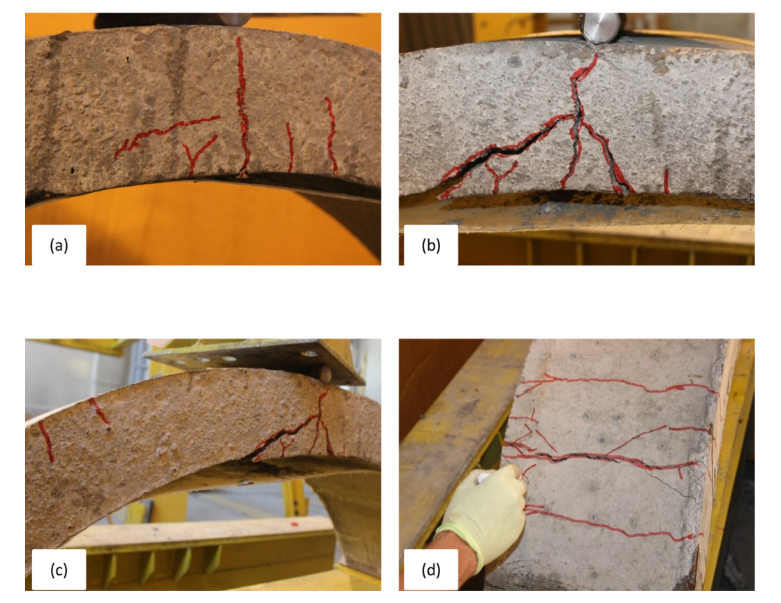
In this experimental research study, the behavior of reinforced concrete arches strengthened with GFRP layers was evaluated using an advanced loading platform with displacement control. The specimens were monitored for cracking, displacement, and failure patterns, and the debonding behavior of GFRP was recorded using precise instrumentation.
The laboratory’s testing capabilities enabled accurate assessment of the effects of external strengthening and GFRP layer arrangements on the capacity and ductility of arches. The results showed that GFRP strengthening increases the load-bearing capacity and improves the energy absorption capability of reinforced concrete arches.
The laboratory’s testing capabilities enabled accurate assessment of the effects of external strengthening and GFRP layer arrangements on the capacity and ductility of arches. The results showed that GFRP strengthening increases the load-bearing capacity and improves the energy absorption capability of reinforced concrete arches.
Test of a Precast Reinforced Concrete Column to Steel Beam Connection (RCS)
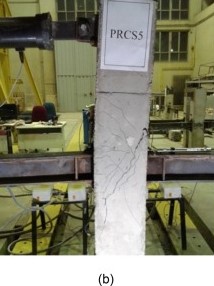
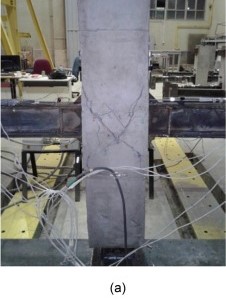
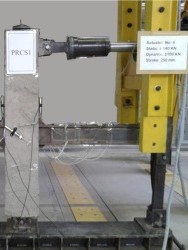
In this research, the seismic performance of RCS connections was evaluated at one-half scale. Two specimens consisting of precast reinforced concrete columns connected to steel beams—one with a steel end plate in the connection region and one without it—were subjected to cyclic lateral loading.
Using measurement equipment, the shear strength of the connection region, crack patterns, connection displacements, stiffness, and cyclic response curves were recorded and evaluated.
Using measurement equipment, the shear strength of the connection region, crack patterns, connection displacements, stiffness, and cyclic response curves were recorded and evaluated.
Evaluation of the Behavior of Semi-Rigid Supports of Cantilever Beams Using DIC
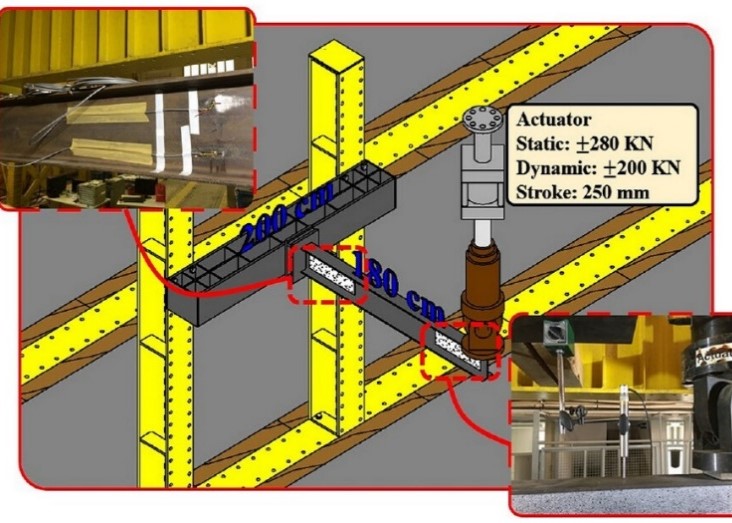
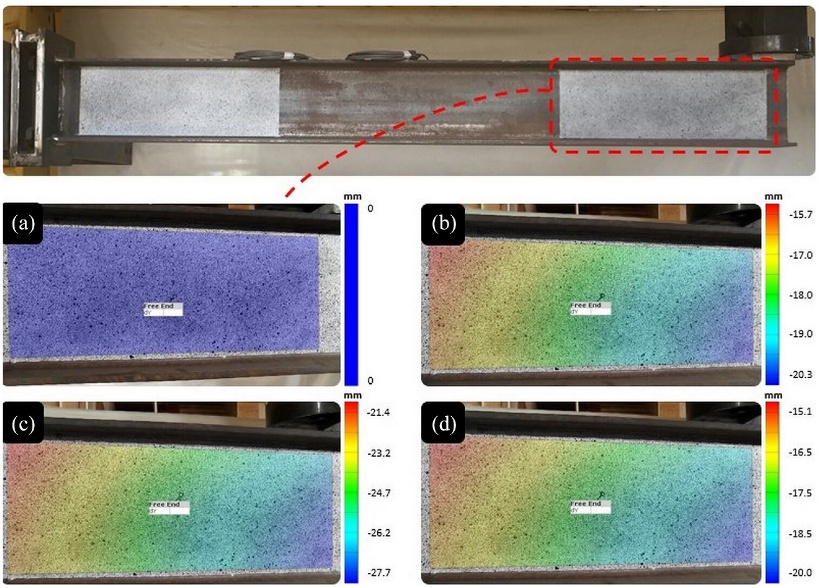
This experimental study investigated the performance of a steel cantilever beam with a semi-rigid connection under concentrated loading. The fabricated specimen was subjected to displacement-controlled loading, and its behavior was recorded using a full-field Digital Image Correlation (DIC) system.
This method enabled continuous measurement of displacement and strain across the beam surface. Experimental results were obtained using the Strong Floor Laboratory’s equipment. The results were used to update the Finite Element Model Updating (FEMU), and the actual rotational behavior of the support was determined.
This project represents a notable example of the laboratory’s capability to combine structural testing with advanced structural health monitoring methods and to generate reference data for analyzing the behavior of steel connections.
This method enabled continuous measurement of displacement and strain across the beam surface. Experimental results were obtained using the Strong Floor Laboratory’s equipment. The results were used to update the Finite Element Model Updating (FEMU), and the actual rotational behavior of the support was determined.
This project represents a notable example of the laboratory’s capability to combine structural testing with advanced structural health monitoring methods and to generate reference data for analyzing the behavior of steel connections.
Reinforced Concrete Slabs Under Impact Loading — Sample Project
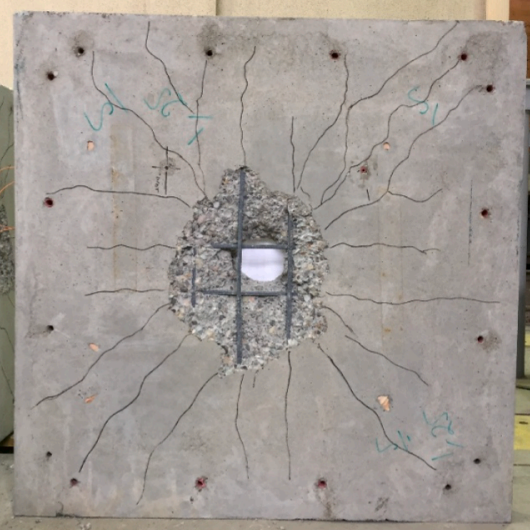
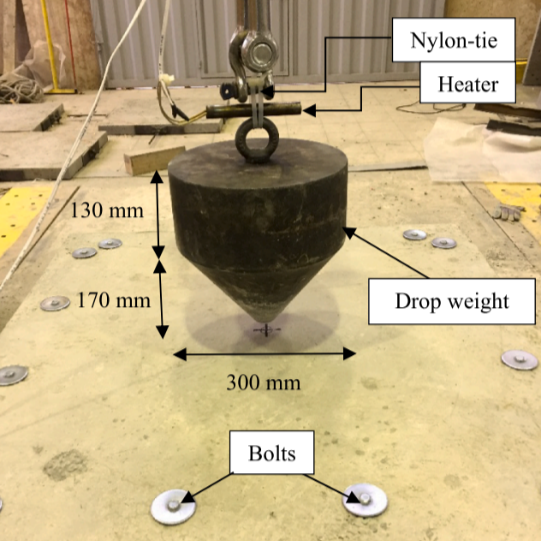
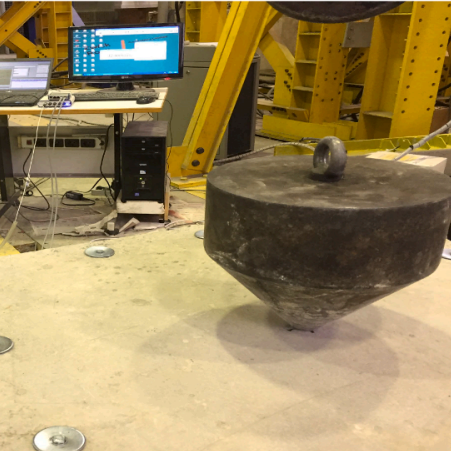
This laboratory study investigated the performance of reinforced concrete slabs strengthened with steel fibers and GFRP layers under impact loading caused by a falling weight.
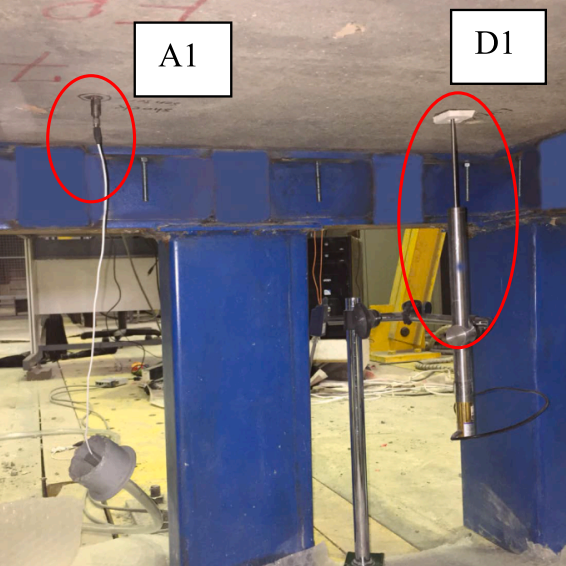
Reinforced concrete slab specimens were tested, and the dynamic responses, including strain, acceleration, and displacement, were recorded using advanced equipment.
The results showed that complete strengthening of the bottom surface with GFRP provided superior performance compared with steel fibers and significantly increased the impact resistance of the slabs.
Reinforced concrete slab specimens were tested, and the dynamic responses, including strain, acceleration, and displacement, were recorded using advanced equipment.
The results showed that complete strengthening of the bottom surface with GFRP provided superior performance compared with steel fibers and significantly increased the impact resistance of the slabs.
Last Update: