
Laboratory Introduction
Overview
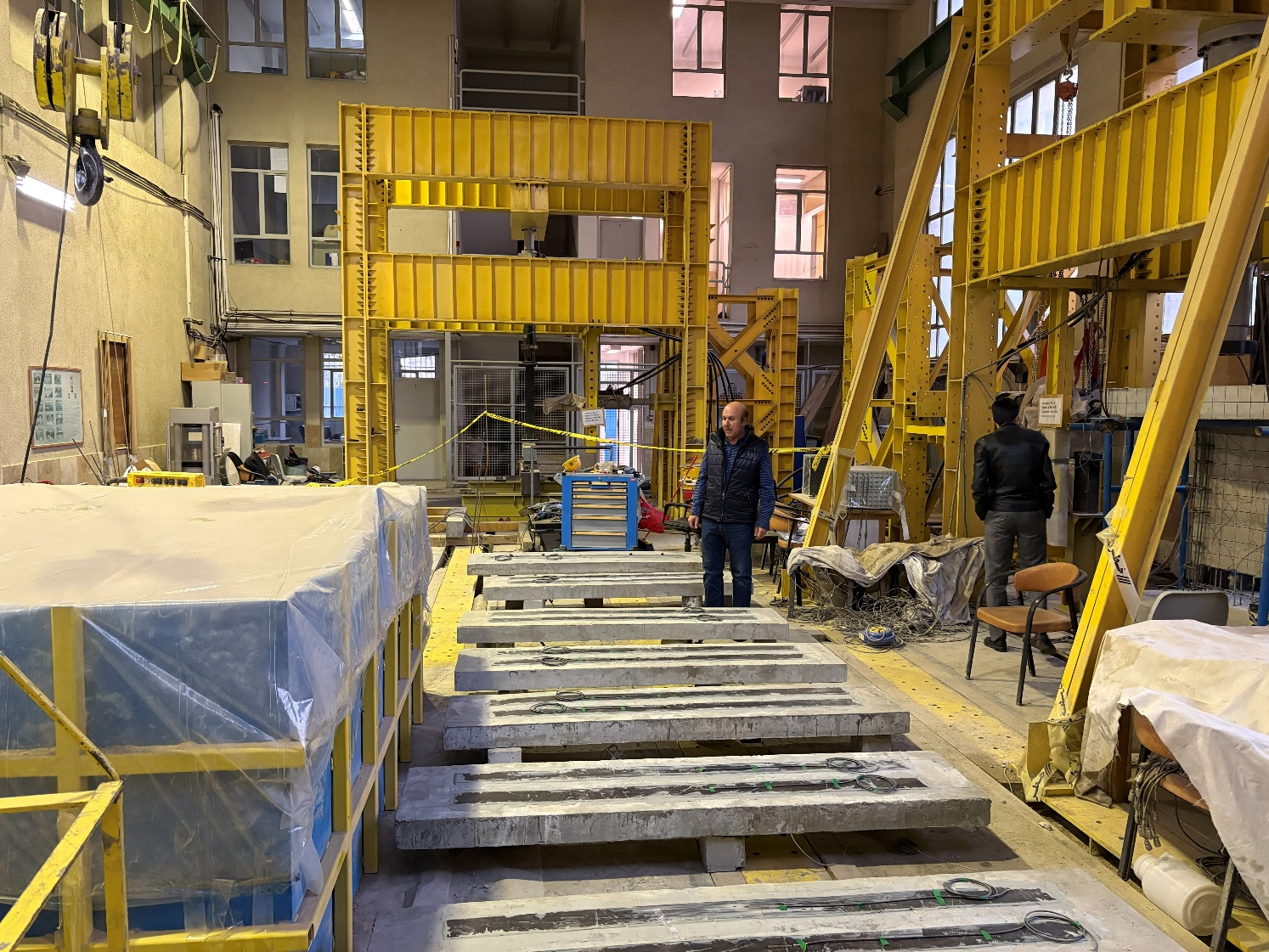
The Strong Floor and Structural Dynamics Laboratory at Sharif University of Technology is one of the country’s most important research infrastructures in structural engineering, established to evaluate the real behavior of structural members and systems at large scales. The laboratory enables full-scale and semi-scale testing under static, quasi-dynamic, and dynamic loading, providing a unique platform for detailed study of nonlinear behavior, failure, and performance of structural components under realistic conditions.
Relying on the results from this laboratory serves as a reliable complement to the limitations of numerical analyses. The data obtained play a key role in developing codes, improving design and construction methods, and evaluating innovative strengthening techniques. Beyond its industrial applications, the center has a pivotal role in graduate research, effectively linking theoretical analysis with experimental practice. The structural design of the laboratory began in 1999, and after official approval, construction started in 2004 and was completed in 2008. Subsequently, advanced equipment—including hydraulic jacks and actuators, loading control systems, precise sensors, and data acquisition systems—was installed and calibrated, marking the start of the operational phase.
Physically, the laboratory features a 10 × 16 m strong floor with high load-bearing capacity, a 9 m clear height, two reaction frames, and a 5-ton overhead crane. These facilities allow testing of a wide variety of specimens, including slabs, walls, beams, connections, and structural frames. These characteristics make Sharif’s Strong Floor Laboratory one of the most reliable centers in the country for evaluating real structural performance, serving as a trusted scientific and industrial reference in structural and earthquake engineering.
History of Design, Construction, and Commissioning
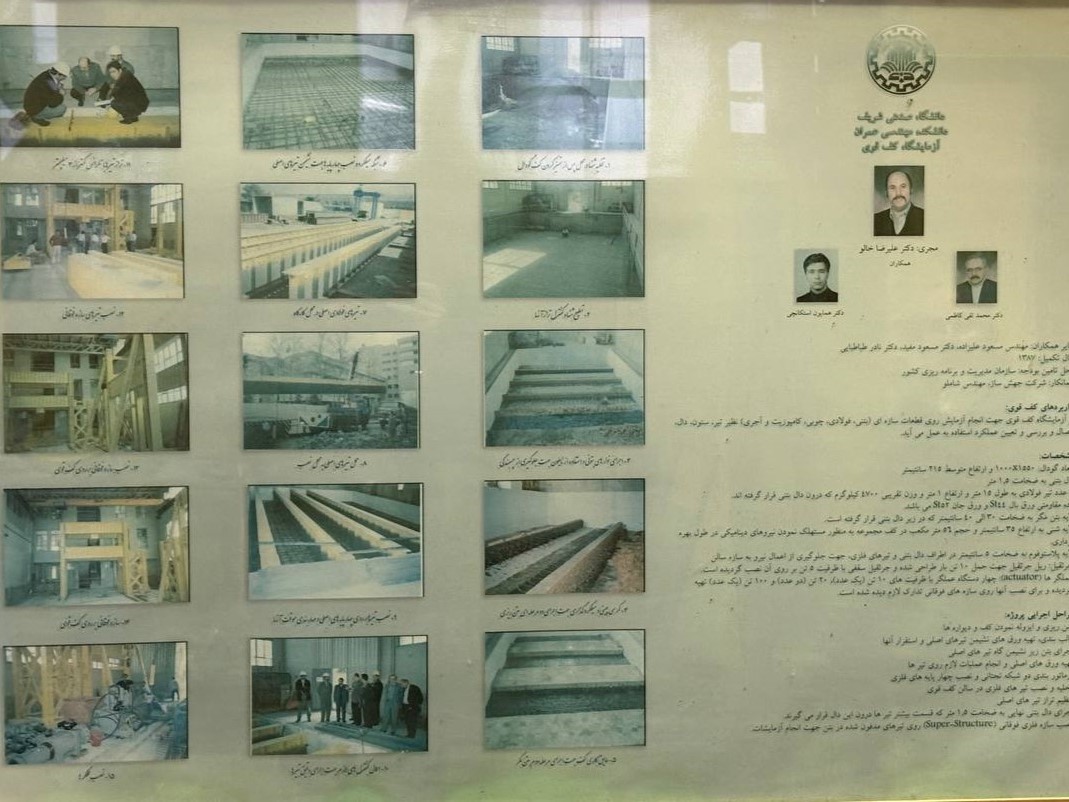
The idea of establishing a national advanced center for full-scale and semi-scale structural testing emerged in the late 1990s. Due to the country’s need for specialized infrastructure to accurately analyze structural behavior under static, quasi-dynamic, and dynamic loads, preliminary studies and technical requirements for the laboratory began in 1999. That same year, the structural design of the strong floor and its construction drawings were completed.
From the outset, the scientific framework of the project was defined, technical requirements were identified, and specialized approaches for the laboratory’s design and implementation were proposed. In the summer of 2004, official approval to begin construction was granted by Sharif University of Technology. The construction phase—including the strong floor, foundations, retaining walls, and other structural components—progressed over several years under strict scientific and technical supervision and was completed in 2008.
Following the civil construction phase, the more specialized and sensitive stage of installing and commissioning advanced loading equipment began. This included high-capacity actuators, hydraulic systems, precise measurement sensors, digital control systems, and specialized fixtures for load application and anchorage.
During this period, the country faced serious limitations due to international sanctions, making the procurement of required equipment particularly challenging. Nevertheless, the Strong Floor Laboratory management successfully guided the project technically, selected appropriate equipment, negotiated with suppliers, supervised installation and calibration, and resolved operational issues.
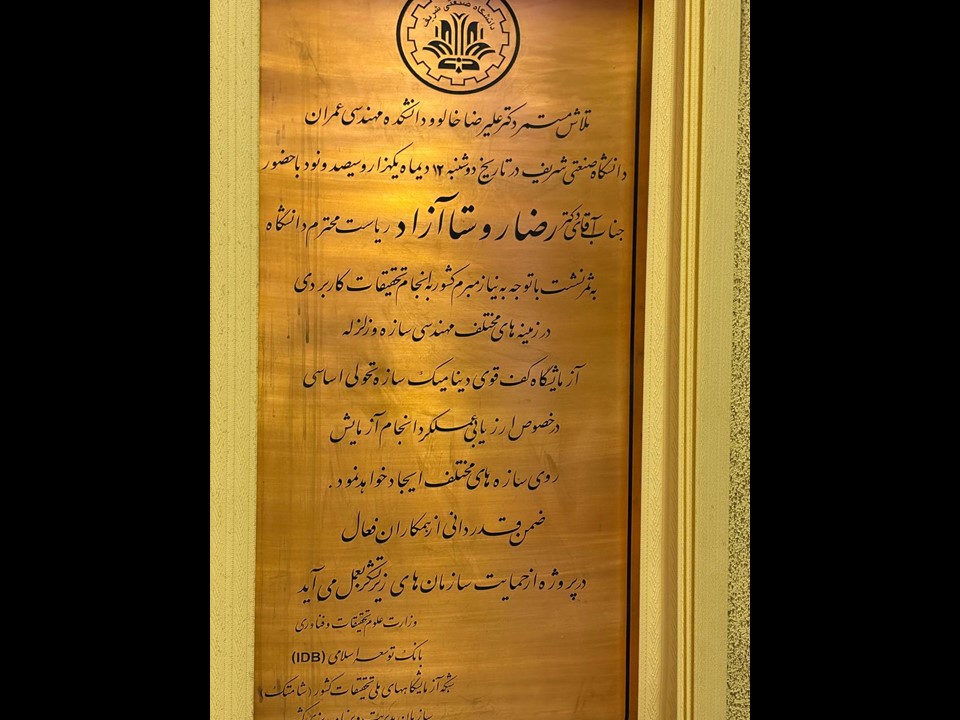
The Strong Floor Laboratory of Sharif University of Technology, established with financial support from the Islamic Development Bank and under the supervision of the Ministry of Science, is now recognized as one of the country’s key research centers for evaluating structural behavior.
From the outset, the scientific framework of the project was defined, technical requirements were identified, and specialized approaches for the laboratory’s design and implementation were proposed. In the summer of 2004, official approval to begin construction was granted by Sharif University of Technology. The construction phase—including the strong floor, foundations, retaining walls, and other structural components—progressed over several years under strict scientific and technical supervision and was completed in 2008.
Following the civil construction phase, the more specialized and sensitive stage of installing and commissioning advanced loading equipment began. This included high-capacity actuators, hydraulic systems, precise measurement sensors, digital control systems, and specialized fixtures for load application and anchorage.
During this period, the country faced serious limitations due to international sanctions, making the procurement of required equipment particularly challenging. Nevertheless, the Strong Floor Laboratory management successfully guided the project technically, selected appropriate equipment, negotiated with suppliers, supervised installation and calibration, and resolved operational issues.
The Strong Floor Laboratory of Sharif University of Technology, established with financial support from the Islamic Development Bank and under the supervision of the Ministry of Science, is now recognized as one of the country’s key research centers for evaluating structural behavior.
-
Laboratory Introduction Brochure
Last Update: