
Laboratory Equipment
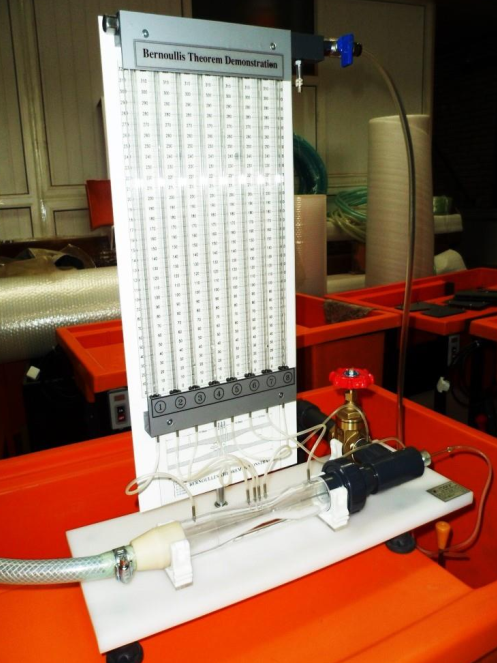
Bernoulli’s Principle Demonstration Device
This device demonstrates the relationship between pressure and flow velocity in a pipe with varying cross-sections. As water passes through narrower sections, velocity increases while pressure decreases. Piezometers along the pipe show these changes, and using a Pitot tube, students can measure the total pressure and kinetic energy of the flow to experimentally verify Bernoulli’s law.
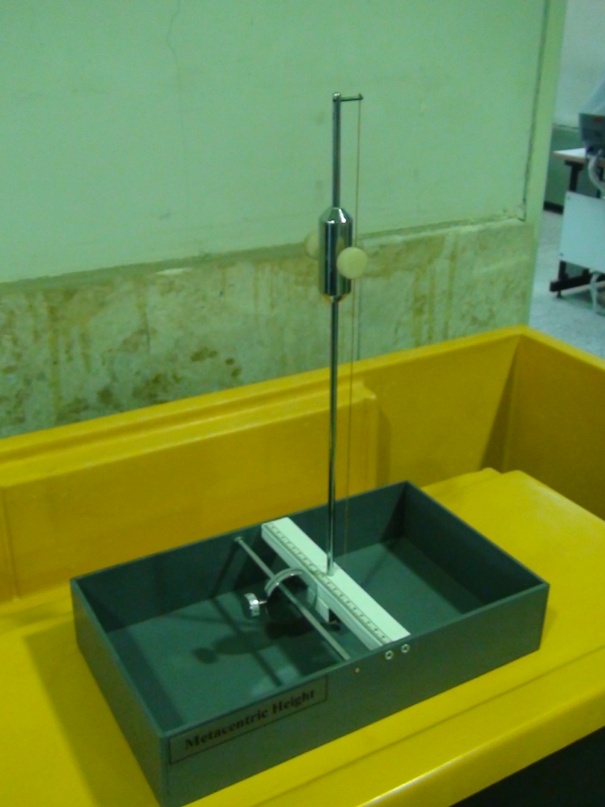
Metacenter Height Apparatus
The metacenter height apparatus is used to study the stability of floating bodies. It consists of a cubic container acting as a floating object, and by moving adjustable weights on it, the center of gravity can be changed. By observing the tilt angle, students can practically explore and analyze conditions of stable and unstable equilibrium for floating objects.
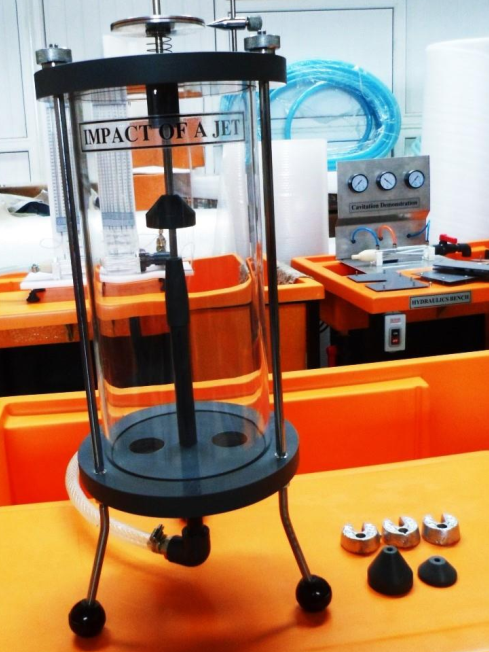
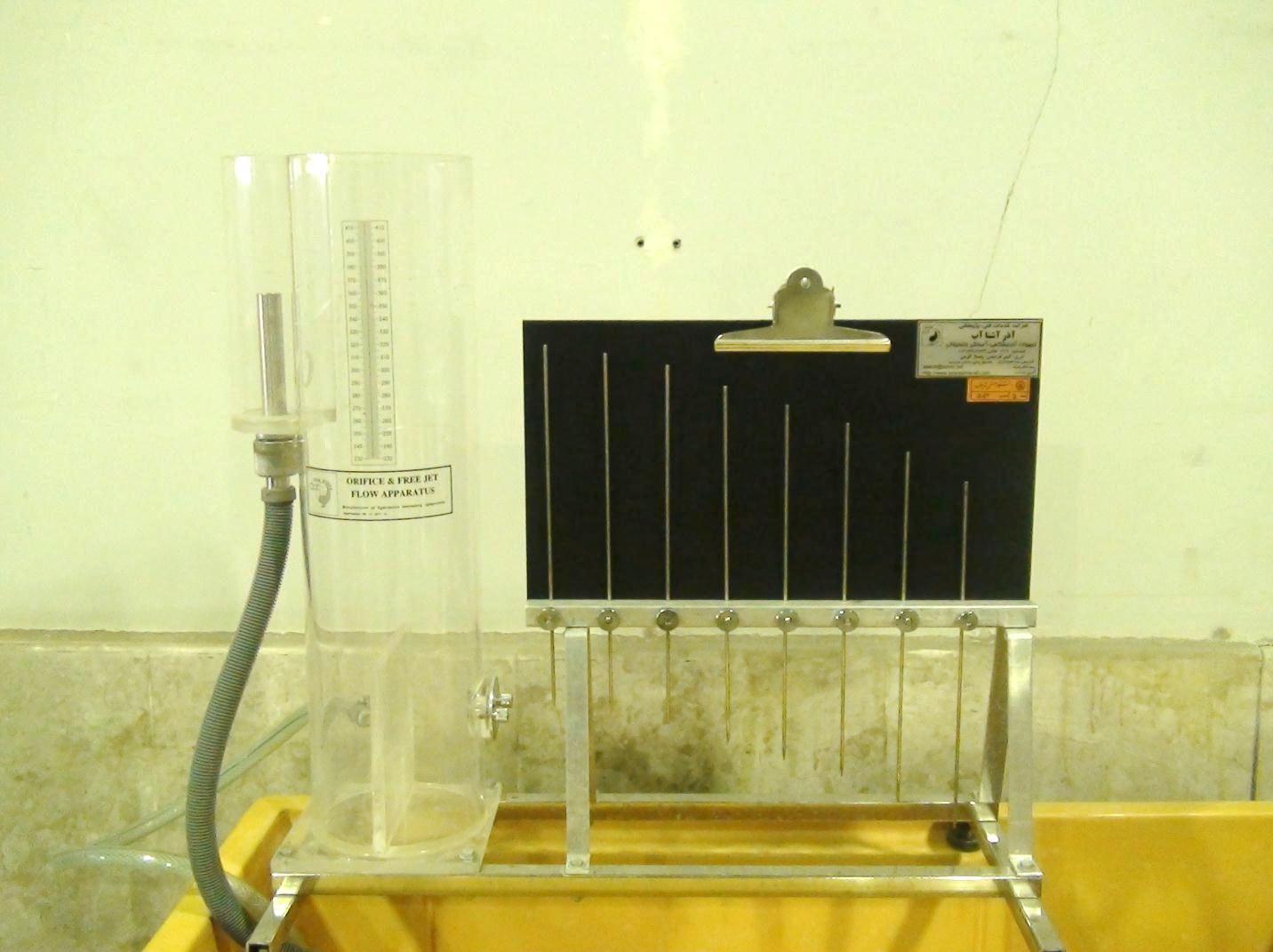
Orifice and Free Jet Apparatus
The orifice and free jet apparatus is used to study the behavior of water flow as it exits an orifice and forms a free jet. Using this device, students can observe the velocity and trajectory of the water exiting the orifice and examine how changes in reservoir water height affect the jet’s shape and size. The water height is adjusted by moving the overflow pipe, and measuring rods record the jet path on a plate. This experiment helps students understand free jet phenomena and the practical application of the relationship between water head and velocity in orifices.
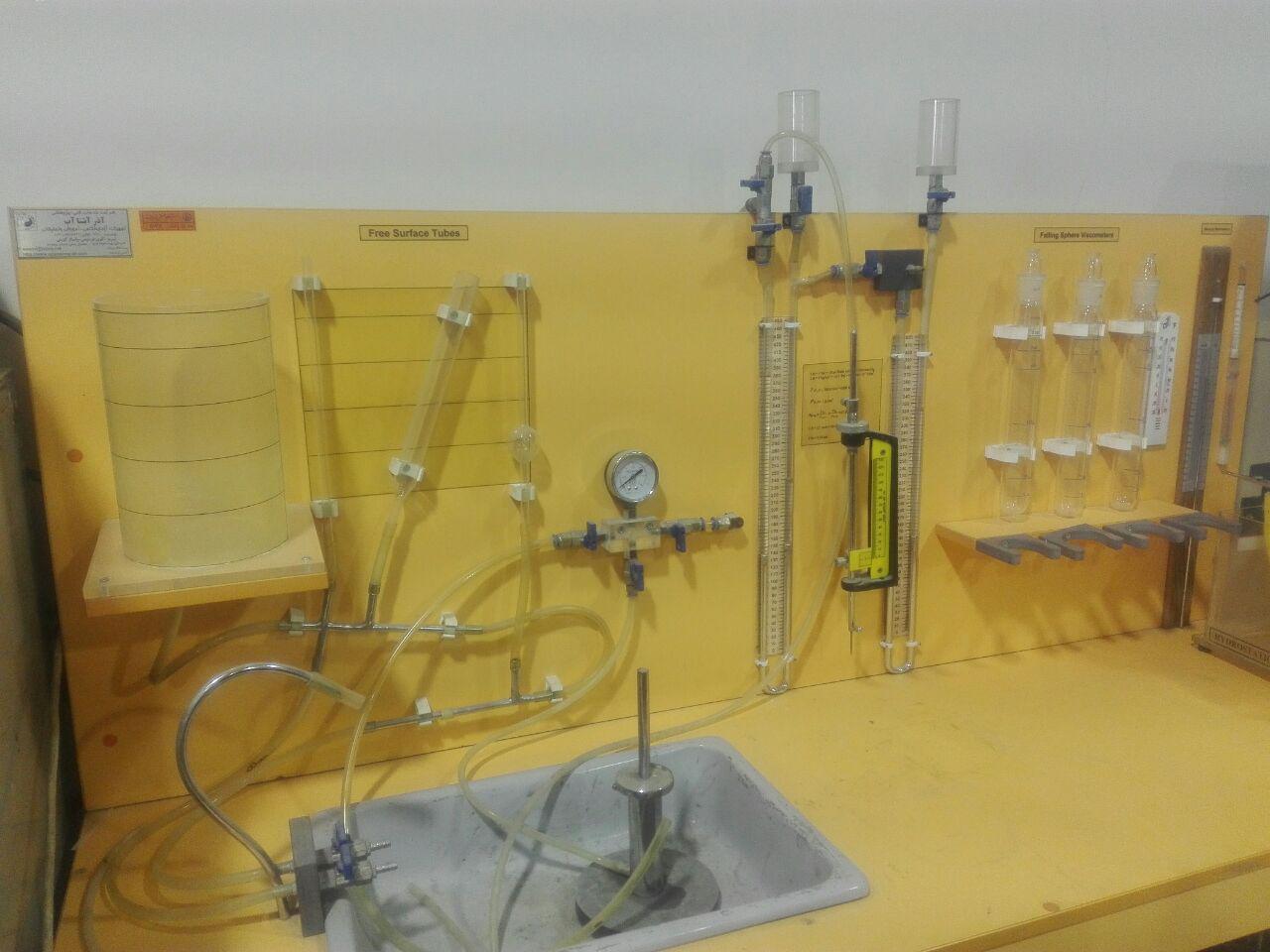
Hydrostatic Table and Fluid Properties Apparatus
This apparatus is designed to observe fluid properties and perform hydrostatic experiments. It includes equipment such as a barometer, hydrometer, ball viscometer, level gauge, and more. Experiments that can be performed include measuring fluid density and specific weight, using a hydrometer, observing capillarity in tubes, analyzing flow-head relationships, and measuring fluid viscosity.
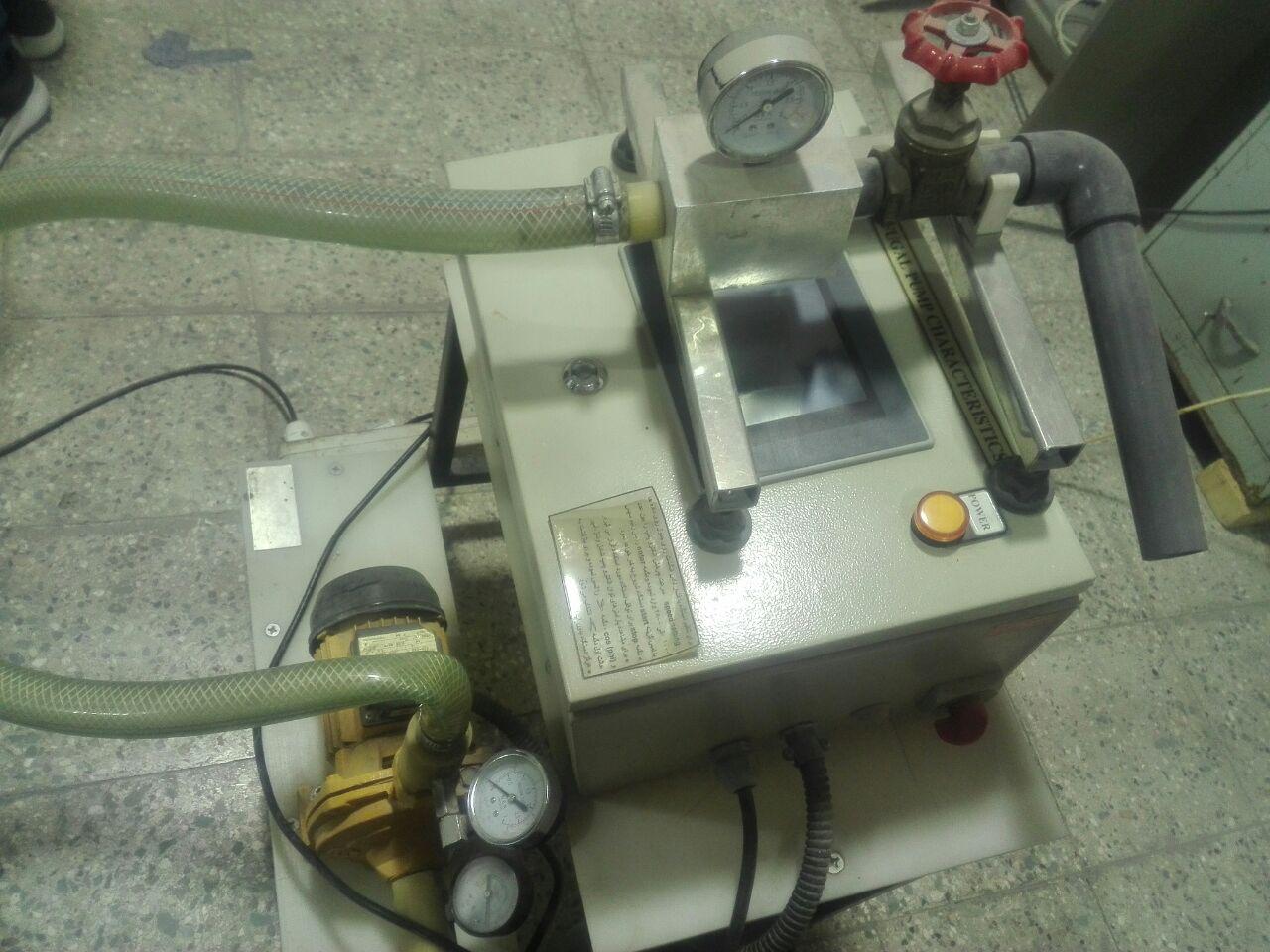
Centrifugal Pump Characteristic Curve Apparatus (Variable Speed)
In laboratory construction and study, geometric and dynamic similarity conditions must be observed. In this device, by connecting it to a hydraulic table reservoir and using the electronic control system, the pump speed can be varied, and head and flow rate can be directly read at required points of the experiment. The pump specifications include a flow rate of 15–70 L/min, a maximum head of 20 m, and a rotational speed of 2,800 rpm.
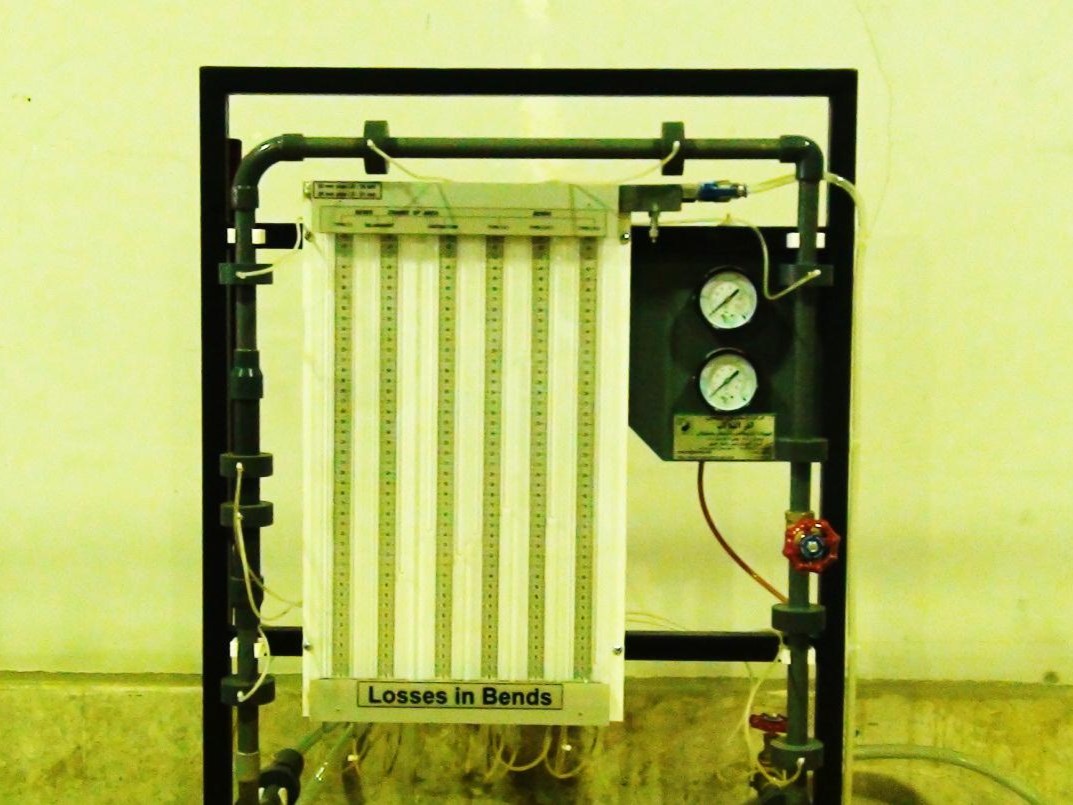
Elbows and Bends Energy Loss Apparatus
This apparatus is used to investigate the energy loss of fluid as it passes through various pipe fittings. It includes a series of elbows, contractions, and expansions, and pressure drop across each fitting is measured using manometers installed before and after the fittings. By adjusting a gate valve, students can also study how the degree of valve opening affects energy loss. This experiment helps students understand head loss in pipe systems and the practical effect of fitting shapes on fluid energy dissipation.
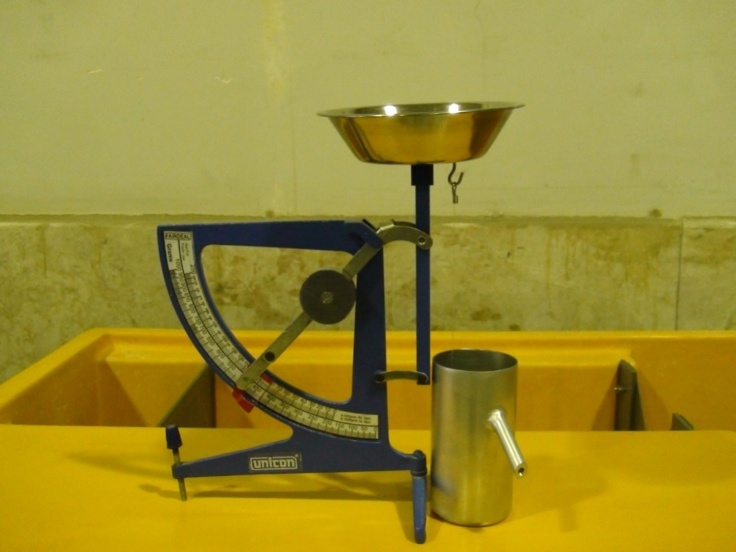
Orifice Discharge Apparatus
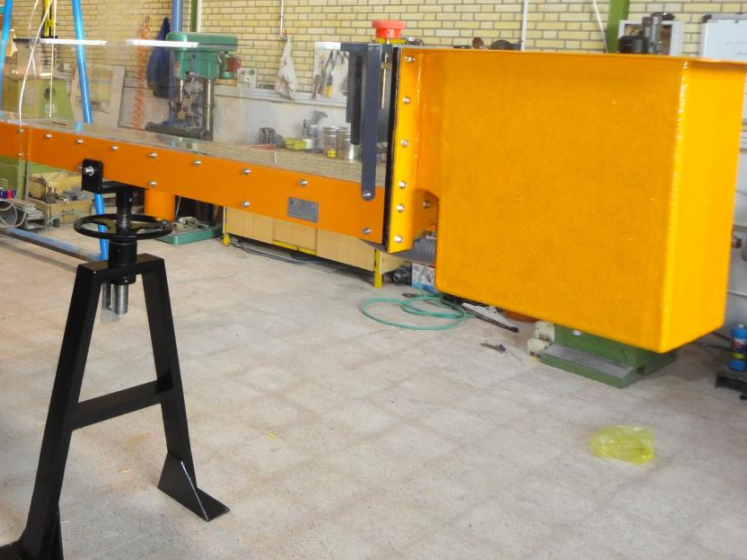
5.5-Meter Tilting Educational Flume and Accessories
This apparatus is used for hydraulic experiments such as flow over gates, hydraulic jumps, flow over bumps, and other hydraulic studies. It is connected to a hydraulic table and comes with accessories including a rotameter, Pitot tube, various bumps, a sluice gate, and a sector gate.
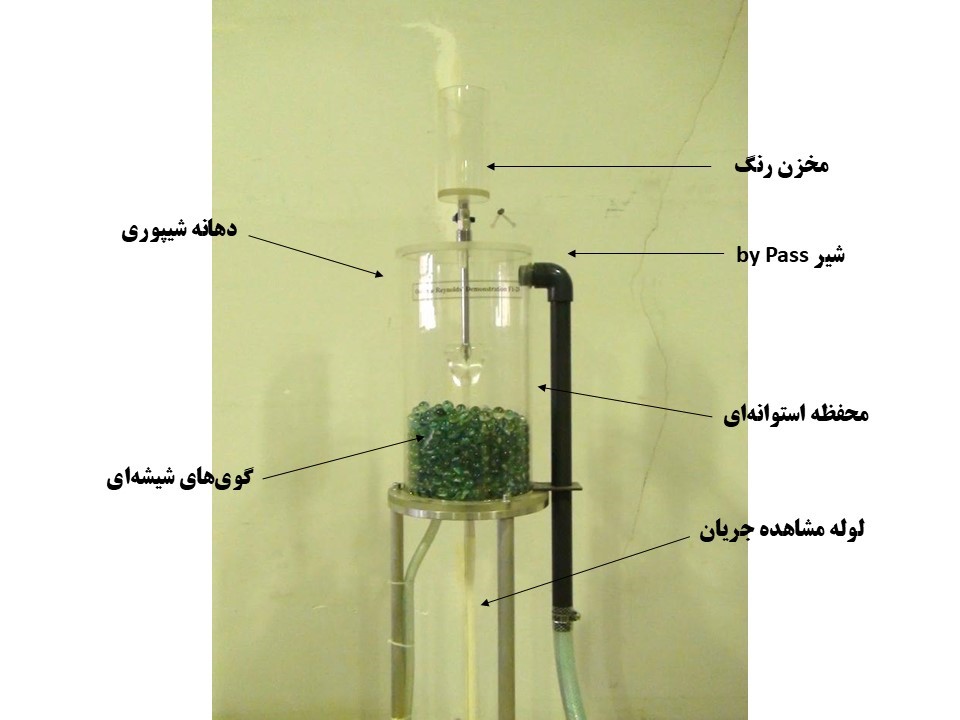
Reynolds Number Apparatus
To determine the flow regime of an incompressible fluid, the dimensionless Reynolds number is used, defined as the ratio of inertial forces to viscous forces. This apparatus includes a cylindrical chamber where water enters and passes through a converging nozzle into a vertical test tube. Glass spheres are placed in the chamber to calm the incoming flow and prevent turbulence. A color injection tank at the top allows visualization of flow patterns. The observation tube has a diameter of 1 cm for clear flow visualization.
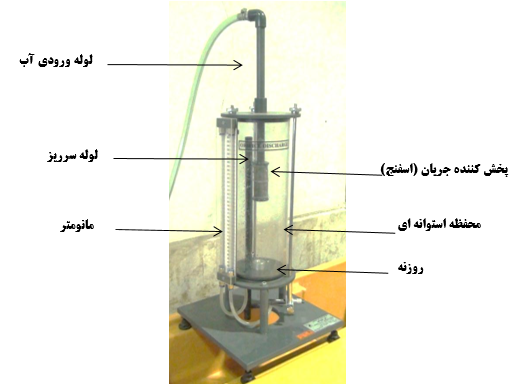
Orifice Discharge Apparatus
This experiment measures the flow rate exiting an orifice, determines the velocity, contraction, and discharge coefficients, and compares the actual draining time of a tank through an orifice with theoretical predictions at different water heights. The device consists of a transparent cylindrical chamber with orifices installed at the bottom. An overflow pipe allows excess water to exit. Two manometers measure the water head in the tank and the velocity head using a Pitot tube. A sponge at the inlet prevents flow turbulence, and a measurement device at the outlet determines the diameter of the exiting water jet.
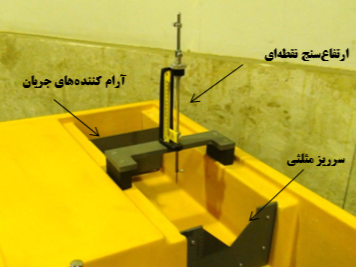
Sharp-Edged Spillway Test Set
The purpose of this experiment is to familiarize students with rectangular and triangular sharp-edged spillways, determine the empirical relationship between flow rate and water head over the spillway, and examine the discharge coefficient. Spillways are widely used devices for measuring flow in channels. They are generally categorized as sharp-edged or broad-crested spillways. Sharp-edged spillways usually consist of a vertical plate installed in the flow path with a relatively sharp crest at the top, where water flows over. Based on shape, spillways can be rectangular, triangular, trapezoidal, circular, parabolic, etc. In this experiment, rectangular and triangular spillways are tested.
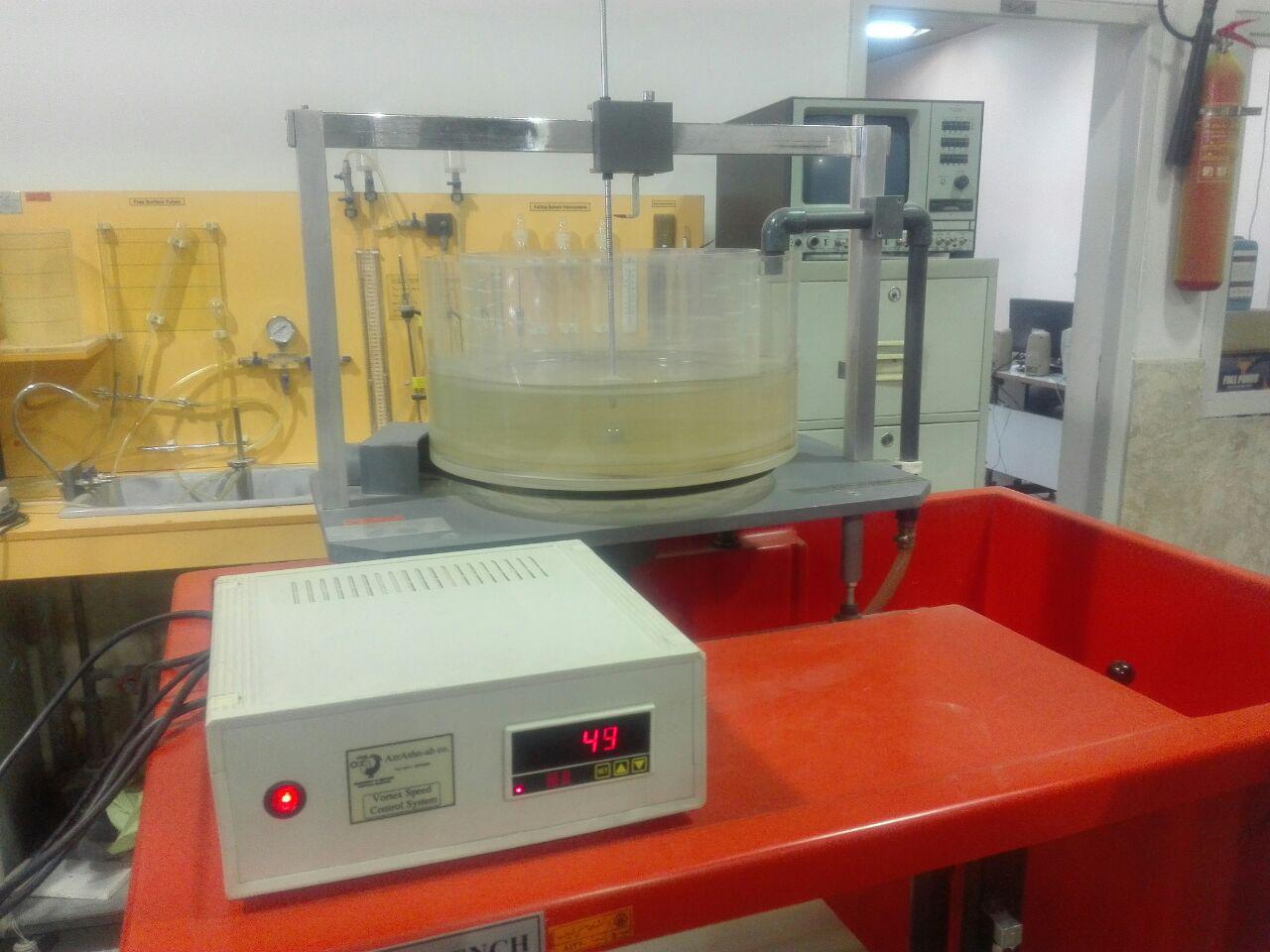
Free and Forced Vortex Apparatus
The purpose of this apparatus is to familiarize students with vortex flow and its formation. It can generate forced vortices at various rotational speeds, allowing students to observe the differences between free and forced vortex behavior and understand the underlying fluid mechanics principles.
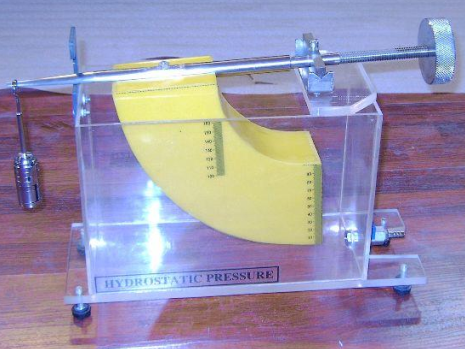
Hydrostatic Pressure Apparatus
In the hydraulics laboratory, this device is used to determine the center of hydrostatic pressure. It features a quarter-circle plate, and by using different weights, students can locate the point of application of hydrostatic force. This provides a practical understanding of pressure distribution on submerged surfaces.